
Quick overview
- Chinese text in 81 short chapters
- Traditionally credited to Laozi
- Translated by James Legge in 1891
What is Tao Te Ching about?
The Tao Te Ching is a short Chinese text of about eighty-one brief chapters, traditionally credited to Laozi, an elder said to have lived in the 6th century BC. Historians are unsure about both the man and the date.
It talks about the Tao, or the Way, an underlying order of nature, and urges simplicity, humility and acting without force. It also gives advice to rulers about governing lightly. This edition is James Legge's 1891 English translation. Its short verses are often paradoxical, and it has been translated into English many times.
Read Tao Te Ching online
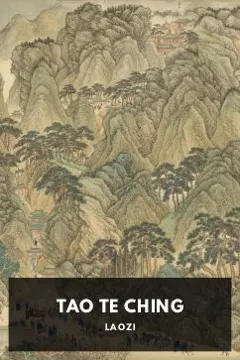
How to read it on a Kindle, Kobo or phone
Kindle: download the EPUB and send it with Amazon's Send to Kindle (web, app or email). Amazon converts it for your device. Kobo, Pocketbook, Apple Books and Google Play Books open the EPUB directly. The PDF keeps the page layout and suits printing or a large tablet.
Is Tao Te Ching free to download?
Yes. Tao Te Ching was first published c. 400 BC, so it is in the US public domain. The work is ancient and the translator died in 1897, so it is free in the EU as well. This edition comes from Standard Ebooks, which releases its texts under CC0.
What is the Tao Te Ching about?
It describes the Tao, or the Way, and recommends a simple life and gentle, uncoercive leadership.
Who translated this edition of the Tao Te Ching?
James Legge, a Scottish scholar of Chinese, who published it in 1891.
 Notes from UndergroundFyodor Dostoevsky
 Nicomachean EthicsAristotle
 WaldenHenry David Thoreau
 The PrinceNiccolò Machiavelli
 Beyond Good and EvilFriedrich Nietzsche
 MeditationsMarcus Aurelius